ISHPA Certificate Pathways — Student Handbook
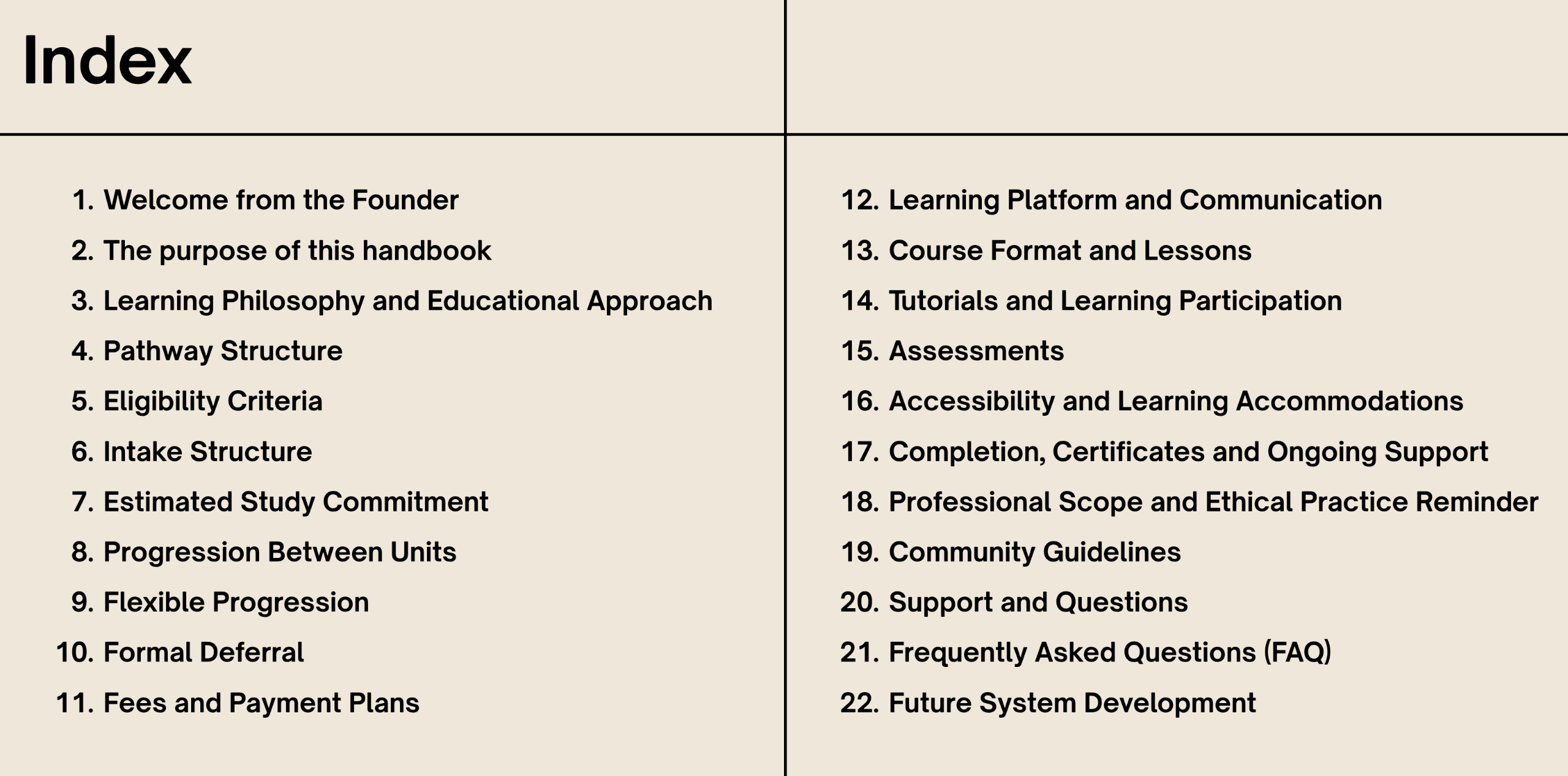
1. Welcome from the Founder
Welcome to the Institute of Sexual Health Psychology Australia (ISHPA) Certificate Pathways. I am delighted that you have chosen to join us.
Sexual symptoms rarely arise from a single cause. Instead, they are shaped by the complex interaction between an individual’s mind, body, relationships, developmental experiences, and broader social environment. To effectively support clients, clinicians need to be able to identify the multiple factors contributing to a presenting concern and understand how these factors interact to influence sexual functioning, intimacy, and wellbeing.
These certificate pathways are designed to introduce the major domains that shape sexual experiences and difficulties. Rather than providing an exhaustive review of every topic, the focus is on developing a conceptual framework that helps you think systematically, holistically, and compassionately about your clients’ presentations.
Many clinicians receive little formal education in how to assess and treat sexual concerns, despite the fact that issues relating to sex, intimacy, relationships, trauma, identity, and shame are deeply woven into the lives of many of the people we support. I created ISHPA to help address this gap.
My vision was to build a world-class training institute that integrates scientific research, clinical expertise, and the lived experiences of diverse communities to equip practitioners with the confidence and practical skills needed to provide thoughtful, evidence-based, trauma-informed, and inclusive sexual health care.
Over the past two decades, I have worked as a psychologist, researcher, educator, and supervisor in the field of sexual health. Through this work, I have seen how profoundly sexuality can be shaped by trauma, attachment, neurobiology, relationships, culture, and systems of power. I have also witnessed the remarkable transformation that can occur when clients feel safe enough to explore this part of themselves with curiosity, compassion, and support.
These certificates were developed to provide the kind of training I wish had existed when I began my own journey. They are designed to help you build both conceptual understanding and practical clinical skills, while also encouraging reflection on your own assumptions, emotional responses, and professional growth.
By joining this program, you are becoming part of a growing community of practitioners committed to reducing shame, expanding understanding, and improving the quality of sexual health care in Australia and beyond.
Thank you for choosing to be part of this vision.
I look forward to supporting you throughout your learning journey.
Warm regards,

Dr Sarah Ashton
Founder and Lead Educator, Institute of Sexual Health Psychology Australia
Founder and Director, Sexual Health and Intimacy Psychological Services (SHIPS)
Registered Psychologist, Board-Approved Supervisor, Society of Australia Sexologists (SAS) Endorsed Educator
Author of When Trauma Affects Sex
2. The purpose of this handbook
This handbook has been developed to support you throughout your learning journey in the Institute of Sexual Health Psychology Australia (ISHPA) Certificate Pathways.
It is designed to provide practical guidance about how the programs are structured and what you can expect as a student, including:
- Pathway and unit structure;
- Intake dates and progression between units;
- Study expectations and assessment requirements;
- Payment plans and administrative processes;
- Certificate of completion;
- Referral Directory eligibility;
- Community Membership and post-completion benefits; and
- Sources of support throughout your training.
The aim of this handbook is to help you navigate the certificate with confidence and clarity. It outlines the key academic, administrative, and practical aspects of the student experience so that you can focus your energy on learning and integrating new clinical skills.
This handbook should be read alongside the ISHPA Terms and Conditions, which set out the formal contractual arrangements relating to enrolment, fees, refunds, academic requirements, and other policies.
It is also designed to be read in conjunction with specific information that will be sent out in relation to each unit about processes, key dates, and assessment guidelines.
As ISHPA continues to grow, some processes and systems may evolve over time. We will make every effort to communicate significant updates and to ensure that students are well supported throughout their training.
We are delighted to have you as part of the ISHPA community and look forward to supporting your development as a skilled, thoughtful, and inclusive practitioner in sexual health psychology.
3. Learning Philosophy and Educational Approach
The Institute of Sexual Health Psychology Australia (ISHPA) Certificate Pathways are designed to provide rigorous, practical, and deeply reflective training in sexual health psychology.
Our educational approach is grounded in the belief that effective work in sexual health requires more than factual knowledge alone. Clinicians need conceptual frameworks that help them organise complex information, practical skills that can be applied confidently in therapy, and opportunities for reflection that support ongoing professional growth.
A Holistic and Integrative Framework
Sexual concerns are rarely caused by a single factor. They typically emerge through the interaction of biological, psychological, relational, developmental, and sociocultural influences.
Throughout the program, students are taught to assess and formulate sexual concerns using an integrative biopsychosocial framework. This approach helps clinicians move beyond symptom-based thinking to develop a more nuanced understanding of how multiple factors interact over time to shape sexual functioning, behaviour, identity, and wellbeing.
A central organising framework used throughout the training is the SHIFT model (Sexual Health Integrated Formulation and Treatment), which provides a structured approach to assessment, formulation, and treatment planning.
Practice-Ready and Skills-Based Learning
The certificate is designed to be highly practical and clinically applicable.
Rather than focusing solely on theory, the program emphasises the development of skills that students can apply immediately in their professional work. Students will learn how to:
- Conduct comprehensive sexual health assessments;
- Formulate complex presentations using integrative frameworks;
- Develop evidence-based treatment plans;
- Navigate sensitive conversations with confidence;
- Adapt interventions to diverse client needs; and
- Work effectively with common and complex sexual concerns.
Integration of Research, Clinical Experience, and Lived Experience
ISHPA’s teaching philosophy integrates three complementary sources of knowledge:
- Contemporary scientific research;
- Extensive clinical and supervisory experience; and
- The lived experiences of individuals and communities whose perspectives have historically been marginalised.
This approach recognises that high-quality sexual health care requires both empirical evidence and an appreciation of the broader social, cultural, and political contexts in which sexuality is experienced.
Trauma-Informed and Inclusive Practice
All ISHPA training is grounded in trauma-informed and inclusive principles.
Students are encouraged to understand sexuality within the context of attachment, developmental experiences, marginalisation, neurodivergence, disability, and systems of power. Particular attention is given to working respectfully with LGBTIQA+ communities, people practising consensual non-monogamy, kink and BDSM communities, sex workers, and other marginalised groups.
Reflective Practice and Professional Growth
Effective sexual health work requires clinicians to reflect on their own beliefs, emotional responses, biases, and areas of uncertainty.
Throughout the program, students are invited to engage in reflective practice to deepen self-awareness and strengthen their therapeutic presence. This process supports both clinical competence and personal growth.
Flexible Adult Learning
The certificate has been designed for busy professionals.
Learning is delivered through a combination of:
- Structured written materials;
- Pre-recorded video lectures;
- Downloadable resources and worksheets;
- Reflective activities;
- Case-based learning;
- Live tutorials; and
- Applied assessments.
This blended format allows students to engage with the material at their own pace while benefiting from interaction, discussion, and feedback.
Building a Community of Practice
ISHPA aims to cultivate a community of clinicians committed to reducing shame, expanding understanding, and improving the quality of sexual health care.
By participating in the certificate, students join a network of professionals who share a commitment to evidence-based, inclusive, and compassionate practice.
4. Pathway Structure
Institute of Sexual Health Psychology Australia (ISHPA) currently offers two certificate pathways designed to meet the needs of professionals at different stages of training and with different professional backgrounds.
Both pathways provide structured, skills-based training in sexual health psychology and are designed to help clinicians develop the confidence and competence to assess, formulate, and respond to sexual concerns using evidence-based, trauma-informed, and inclusive approaches.
Standalone Unit Enrolment
ISHPA’s standard enrolment structure is enrolment into a complete certificate pathway. However, in some circumstances, participants may enrol into an eligible standalone unit without committing to the full pathway.
At present, standalone enrolment is only available for Unit 1.
Standalone units are designed for participants who may wish to complete a specific area of training or explore the course content without enrolling into the full certificate pathway.
Important things to know:
- standalone units are paid upfront per unit;
- payment plans are not available for standalone enrolment;
- completing a standalone unit does not automatically enrol a participant into the full certificate pathway;
- completing a standalone unit does not guarantee access to future units;
- future progression depends on course availability, eligibility requirements, pathway updates, and ISHPA approval;
- standalone enrolment does not include directory listing, endorsement, or ISHPA Community Membership access; and
- participants who successfully complete the unit will receive a certificate of completion for that standalone unit only.
Participants who later wish to continue into a full certificate pathway may be required to meet updated eligibility requirements, complete additional learning activities, or comply with updated course structures and fees.
ISHPA Certificate in Sexual Health Psychology
Psychologist Pathway
This pathway is designed for registered psychologists seeking advanced training in the assessment, formulation, and treatment of sexual concerns, including more complex presentations involving trauma, attachment difficulties, relationship challenges, and co-occurring mental health concerns.
The pathway consists of:
- Three 12-week units
- Approximately 36 weeks of structured learning
- Completion timeframe of 10–12 months for students progressing consecutively
This pathway leads to:
- ISHPA Certificate in Sexual Health Psychology
- Eligibility for inclusion in the ISHPA Clinician Directory (subject to ongoing eligibility and renewal requirements)
- 12 months of ISHPA Community Membership for continued professional development
ISHPA Certificate in Sexual Health Psychology-Informed Practice
Informed-Practice Pathway
This pathway is designed for allied health and therapy professionals who wish to develop confidence in working with sexual concerns using sexual health psychology-informed frameworks and interventions.
The pathway consists of:
- Two 12-week units
- Approximately 24 weeks of structured learning
- completion timeframe of 7–8 months for students progressing consecutively
This pathway leads to:
- ISHPA Certificate in Sexual Health Psychology-Informed Practice
- Eligibility for inclusion in the ISHPA Clinician Directory (subject to ongoing eligibility and renewal requirements)
- 12 months of ISHPA Community Membership for continued professional development
Sequential Progression
Units are completed in a prescribed sequence, with each unit building upon the knowledge and skills developed in the previous unit.
Participants must successfully complete each unit before progressing to the next.
Certificate in Sexual Health Psychology-Informed Practice
- Unit 1
- Unit 2
Certificate in Sexual Health Psychology
- Unit 1
- Unit 2
- Unit 3
Flexible Completion
While students may progress directly through consecutive intakes, ISHPA recognises that many participants are balancing clinical practice, professional development, and personal commitments.
Students may choose to delay progression between units and complete the pathway over a longer period, provided all academic and administrative requirements are completed within the maximum 24-month completion timeframe.
Shared Educational Foundations
Although the two pathways differ in depth and duration, both are grounded in the same educational philosophy and share core principles:
- Integrative biopsychosocial formulation;
- Trauma-informed and inclusive practice;
- Application of the SHIFT model;
- Practical, skills-based learning; and
- Ongoing reflective practice.
Both pathways are designed to help clinicians develop a sophisticated understanding of sexual health and to translate this knowledge into confident, ethical, and compassionate clinical practice.
5. Eligibility Criteria
The Institute of Sexual Health Psychology Australia (ISHPA) Certificate Pathways are designed to build upon existing knowledge and foundational skills in psychology, counselling, and talk-based therapeutic practice within the area of sexual health psychology.
For this reason, the eligibility criteria are intended to ensure that students have sufficient professional or academic foundations to engage meaningfully with the course content and apply the learning appropriately within their scope of practice.
Certificate in Sexual Health Psychology
Psychologist Pathway
Eligibility for this pathway is currently limited to:
- Psychologists with General Registration (or area of endorsement such as clinical) with AHPRA.
- Psychologists with Provisional Registration with AHPRA.
- Clinicians with relevant postgraduate training in talk-based therapy and/or extensive clinical experience in trauma-informed assessment and intervention.
Applicants are required to provide a copy of their current AHPRA registration certificate, or relevant postgraduate degree certificate or other evidence of qualification/relevant clinical experience.
Certificate in Sexual Health Psychology-Informed Practice
Informed Practice Pathway
This pathway is designed for clinicians and helping professionals working in therapeutic or health-related roles.
Eligible applicants may include:
- Social workers;
- Counsellors;
- Occupational therapists;
- Psychotherapists;
- Mental health clinicians;
- Medical practitioners; and
- Other allied health or therapy professionals at ISHPA’s discretion.
Students currently enrolled in a relevant degree or professional training program may also be eligible to apply.
Applicants may be required to provide evidence of qualifications, current study, or professional registration where relevant.
Recommended Professional Experience
While not mandatory, it is strongly recommended that students enrolling in either pathway have some prior therapeutic, clinical, or client-facing experience.
Students often gain the greatest benefit from the training when they are able to:
- Reflect on clinical experiences;
- Apply concepts to real-world practice;
- Integrate learning into therapeutic work; and
- Engage with formulation and intervention processes from a practical perspective.
Additional Eligibility Considerations
ISHPA reserves the right to:
- Request additional supporting documentation;
- Clarify professional background or scope of practice;
- Determine eligibility on a case-by-case basis; and
- Decline enrolment where an applicant is considered unsuitable for the pathway.
These decisions are intended to help ensure that students are appropriately positioned to engage safely, ethically, and meaningfully with the content and clinical frameworks presented throughout the training.
6. Intake Structure
Institute of Sexual Health Psychology Australia (ISHPA) generally offers three intakes each year, providing students with multiple opportunities to commence or progress through their chosen certificate pathway.
Annual Intake Periods
Units are typically offered during the following intake periods:
- February Intake
- May Intake
- September Intake
These intakes are scheduled to provide regular progression opportunities while allowing students flexibility to pace their learning around professional and personal commitments.
Typical Unit Duration
Each unit runs over a 12-week teaching period and includes:
- Structured written learning materials
- Pre-recorded video lectures
- Downloadable resources and worksheets
- Reflective activities
- Four live tutorials
- Assessment tasks
Students are expected to complete all learning activities and assessments within the designated teaching period unless an extension has been approved.
Example Academic Calendar
The following dates provide an example of how the intake structure may operate:
September 2026 Intake
7 September 2026 – 29 November 2026
February 2027 Intake
1 February 2027 – 23 April 2027
May 2027 Intake
17 May 2027 – 7 August 2027
Dates may vary slightly from year to year depending on scheduling and operational requirements.
Confirmation of Upcoming Intakes
Prior to each new unit, students will generally receive communication from ISHPA confirming:
- The dates for the upcoming intake;
- Tutorial schedules;
- Enrolment or progression instructions;
- Any required administrative actions; and
- Relevant preparation information.
Students are encouraged to monitor their email and respond to progression communications within the requested timeframe.
Changes to Intake Dates
ISHPA reserves the right to amend intake dates, tutorial schedules, and related timelines where reasonably necessary. Where significant changes occur, students will be notified as early as practicable.
7. Estimated Study Commitment
The Institute of Sexual Health Psychology Australia (ISHPA) Certificate Pathways are designed to provide rigorous postgraduate-level training while remaining flexible and manageable for busy professionals.
Most students should expect to dedicate approximately 3–5 hours per week to core learning activities during each 12-week unit. Additional time may be required when completing assessments, undertaking optional reading, or engaging more deeply with complex topics.
Typical Weekly Learning Activities
Your study time may include:
- Reading structured course materials;
- Watching pre-recorded video lectures;
- Completing reflective exercises and applied activities;
- Reviewing recommended articles and resources;
- Participating in live tutorials;
- Applying concepts to your current clinical work; and
- Preparing and completing assessment tasks.
Estimated Weekly Time Commitment
|
Activity |
Approximate Time |
|
Written materials and video modules |
2–3 hours |
|
Reflective activities |
15 minutes |
|
Live tutorial attendance (scheduled periodically- not every week) |
1 hour |
|
Optional reading and deeper exploration |
Variable |
|
Assessment preparation (during assessment periods) |
Additional time as required |
During Assessment Periods
Weeks involving assessment preparation and submission may require a greater time commitment. Students are encouraged to plan ahead and allocate additional time to complete assessments thoughtfully and to integrate feedback where relevant.
Flexible Self-Paced Learning
Most course content is delivered asynchronously, allowing students to engage with materials at times that fit around work and personal commitments. Many students find it helpful to schedule regular weekly study blocks to maintain momentum and reduce last-minute pressure.
Learning as an Ongoing Process
The certificate is designed not only to build knowledge, but also to support the gradual development of clinical confidence and conceptual sophistication. Students often continue to reflect on and apply the material within supervision and clinical practice long after completing each module.
Our Recommendation
To gain the greatest benefit from the program, we recommend that students:
- Set aside regular, protected study time each week;
- Progress through modules sequentially;
- Attend tutorials live whenever possible;
- Apply concepts to real clinical cases;
- Keep notes and reflections; and
- Allow themselves time to integrate new ways of thinking.
While the workload is manageable for most working clinicians, the depth and breadth of the content means that meaningful learning requires consistent engagement over time.
8. Progression Between Units
Students will ordinarily progress through their chosen pathway by enrolling in the next unit after successfully completing the preceding unit.
Progression is designed to be sequential, with each unit building upon the knowledge, skills, and clinical frameworks introduced in the previous unit. Students must therefore successfully complete each unit before they are eligible to commence the next.
Standard Progression Pathway
Certificate in Sexual Health Psychology-Informed Practice
- Unit 1 → Unit 2
Certificate in Sexual Health Psychology
- Unit 1 → Unit 2 → Unit 3
Eligibility to Progress
Before progressing to the next unit, students must:
- Successfully complete all required assessments;
- Achieve a passing grade in the current unit;
- Meet tutorial attendance requirements;
- Complete all required learning activities; and
- Be up to date with all payment obligations.
Students who have not met these requirements may be required to complete re-submissions, re-enrol in the unit, or resolve outstanding administrative matters before progression is approved.
Progression Communication
Prior to the commencement of each subsequent unit, students will generally receive communication from Institute of Sexual Health Psychology Australia (ISHPA) confirming:
- The dates of the upcoming intake;
- Progression eligibility;
- Any outstanding actions required;
- Tutorial schedules; and
- Preparation instructions.
Students are encouraged to review these communications carefully and respond by any requested deadlines.
Delaying Progression
Students are not required to progress into the next available intake and may elect to commence a later intake if desired. This is referred to as flexible progression and allows students to pace their learning around professional and personal commitments.
Flexible progression is available provided that students:
- Remain within the maximum 24-month completion timeframe; and
- Continue to meet any applicable financial obligations.
Re-Enrolment Following Unsuccessful Completion
Students who do not successfully complete a unit after the permitted re-submission opportunity may re-enrol in a future intake in accordance with the re-enrolment policy outlined in the ISHPA Terms and Conditions.
9. Flexible Progression
Institute of Sexual Health Psychology Australia (ISHPA) recognises that most students are balancing study with clinical work, supervision, business commitments, and personal responsibilities. For this reason, the certificate pathways are designed to provide flexibility in how quickly you move from one unit to the next.
Flexible progression allows students to take breaks between units and commence subsequent units in later intake periods without this being considered a formal deferral.
How Flexible Progression Works
After successfully completing a unit, students may choose to:
- Progress directly into the next available intake;
- Delay progression and commence the next unit in a later intake; or
- Take a temporary break to accommodate professional or personal commitments.
This flexibility allows students to tailor the pace of the program to their individual circumstances while maintaining access to a structured and coherent learning pathway.
Completion Timeframe
Flexible progression is available provided that all academic and administrative requirements are completed within the standard 24-month completion timeframe, measured from the commencement date of Unit 1.
This timeframe includes:
- Completion of all required units;
- Submission and successful completion of assessments;
- Satisfaction of progression requirements; and
- Completion of all payment obligations.
Typical Flexible Progression Options
Certificate in Sexual Health Psychology-Informed Practice
Students enrolled in the two-unit pathway may generally delay commencement of Unit 2 by up to approximately four intake periods and still complete the pathway within the standard timeframe.
Certificate in Sexual Health Psychology
Students enrolled in the three-unit pathway may generally delay progression across Units 2 and 3 by up to approximately three intake periods in total and still complete the pathway within the standard timeframe.
These examples are provided as general guidance only and individual circumstances may vary.
Financial Obligations
Choosing to delay progression does not alter any agreed payment plan or financial obligations unless otherwise approved by ISHPA in writing.
Participants enrolled under a payment plan remain responsible for continuing payments according to the agreed schedule, regardless of when they choose to commence subsequent units.
When Formal Deferral May Be Required
If a student is unable to complete the pathway within the 24-month timeframe due to significant illness, parental leave, family hardship, or other exceptional circumstances, a formal deferral may be requested.
Further information about formal deferral is provided in the next section and in the ISHPA Terms and Conditions.
Our Recommendation
Many students benefit from progressing directly through consecutive intakes, as this helps maintain momentum and supports the integration of learning over time. However, one of the strengths of the ISHPA pathways is the ability to adjust the pace when needed.
We encourage students to choose a progression schedule that is both challenging and sustainable, allowing adequate time for study, reflection, and application in clinical practice.
10. Formal Deferral
Institute of Sexual Health Psychology Australia (ISHPA) recognises that, at times, significant life events or unexpected circumstances may substantially affect a student’s ability to continue with their studies.
Where a student is unable to complete their chosen pathway within the standard 24-month completion timeframe, they may apply for a formal deferral.
What Is a Formal Deferral?
A formal deferral is an approved pause or extension to the standard completion timeframe that allows a student to temporarily suspend their studies and resume at a later date.
Formal deferral is intended for situations in which circumstances extend beyond the flexibility provided through normal progression options.
Examples of Circumstances That May Support a Deferral
Examples may include, but are not limited to:
- Significant illness or injury;
- Parental leave;
- Family crisis or caring responsibilities;
- Bereavement;
- Major professional disruption; or
- Other exceptional personal circumstances.
Requesting a Formal Deferral
Students requiring a formal deferral are encouraged to contact the ISHPA team as early as possible.
Deferral requests:
- Must be submitted in writing;
- May require supporting documentation; and
- Are assessed on a case-by-case basis.
Possible Outcomes
Where a deferral is approved, ISHPA may determine:
- A revised completion timeframe;
- The intake in which the student may recommence;
- Any revised payment arrangements;
- Whether updated course materials or assessments must be completed; and
- Any conditions associated with recommencement.
Important Considerations
Approval of a formal deferral does not guarantee:
- Access to the same course schedule;
- Identical tutorial dates;
- Unchanged assessment requirements;
- Availability of the same facilitators; or
- Preservation of the original course fee if substantial program updates have occurred.
Additional administrative or tuition fees may apply where appropriate.
Payment Plans
Unless otherwise approved in writing, any existing payment plan continues according to the agreed schedule during the deferral period.
Students experiencing financial hardship are encouraged to discuss their circumstances with the ISHPA team as early as possible.
Returning to Study
When the student is ready to recommence, ISHPA will work with them to determine the most appropriate intake and any steps required to re-enter the pathway successfully.
11. Fees and Payment Plans
The Institute of Sexual Health Psychology Australia (ISHPA) Certificate Pathways are designed as comprehensive postgraduate training programs. ISHPA’s standard enrolment structure is enrolment into a complete certificate pathway. In some circumstances, eligible standalone unit enrolment may also be available.
This section provides an overview of course fees, payment options, and how payment plans operate throughout the program.
Current Pathway Fees
The current fees are:
- Certificate in Sexual Health Psychology-Informed Practice: AUD $3,200
- Certificate in Sexual Health Psychology: AUD $4,800
Course fees may be updated for future intakes. Any pricing changes will not apply retrospectively to students who are already enrolled in an active cohort or approved payment plan.
Payment Options
Students may choose from the following payment options:
- Upfront payment in full; or
- An approved installment payment plan.
Payment plans are designed to make the certificate more accessible by allowing the total tuition fee to be spread over time.
How Payment Plans Work
Payment plans apply to the total certificate pathway fee rather than to individual units.
By selecting a payment plan, students agree that:
- Payments commence from the date of enrolment;
- Payments continue according to the agreed payment schedule;
- Payment obligations are not linked to the timing of individual units;
- Payments continue even if a student chooses to delay progression within the permitted timeframe; and
- Full payment remains due unless a refund is approved under the ISHPA Terms and Conditions.
In other words, a payment plan is a financing arrangement for the entire pathway, not a pay-per-unit arrangement.
Standalone Unit Payment
Standalone units are paid upfront per unit.
Standalone enrolments are not eligible for:
- certificate pathway payment plans;
- payment pauses linked to pathway progression; or
- automatic credit toward future pathway enrolment.
Financial Hardship
Students experiencing financial difficulties are encouraged to contact ISHPA as early as possible.
Where appropriate, ISHPA may consider:
- Alternative payment arrangements;
- Short-term payment extensions; or
- Exceptional circumstance considerations.
Any adjustments are made at ISHPA’s discretion and are assessed on a case-by-case basis.
Payment Completion and Certificate
All tuition fees must be paid in full before the following can be issued or activated:
- Official certificate of completion;
- Invitation to join the ISHPA Clinician Directory; and
- Twelve months of ISHPA Community Membership.
Withdrawals and Refunds
Students who withdraw prior to or during the program may be eligible for a refund in accordance with the ISHPA Terms and Conditions.
Detailed information regarding:
- Payment plans;
- Withdrawals;
- Refunds; and
- Non-payment
is provided in the ISHPA Terms and Conditions.
12. Learning Platform and Communication
Institute of Sexual Health Psychology Australia (ISHPA) currently delivers its certificate pathways through a combination of online learning platforms, email communication, and live tutorial sessions.
Learning Management System (LMS)
ISHPA currently uses Kajabi as its Learning Management System (LMS).
Through the LMS, students will be able to access:
- Written learning materials;
- Pre-recorded video lectures;
- Downloadable resources and worksheets;
- Assessment instructions and submission information;
- Tutorial links and recordings (where applicable);
- Course announcements; and
- Additional learning resources and updates.
Students are encouraged to familiarise themselves with the platform early and to progress through modules sequentially.
Student Communication
Important pathway and administrative communications may be distributed through:
- Kajabi platform notifications;
- Automated email communication;
- Manual administrative emails; and
- Direct communication from the ISHPA team where required.
Students may receive communication regarding:
- Onboarding and course access;
- Tutorial schedules and reminders;
- Assessment deadlines and feedback;
- Progression into future units;
- Administrative updates;
- Community Membership access; and
- Certificate of Completion and Clinician Directory processes.
Student Responsibilities
Students are responsible for:
- Regularly monitoring their nominated email address;
- Ensuring their contact details remain current;
- Checking spam or junk folders where necessary;
- Reviewing important announcements and communications in a timely manner; and
- Maintaining access to the required learning platforms and technology.
Failure to review communications does not exempt students from assessment deadlines, progression requirements, payment obligations, or administrative processes.
Technical Support
ISHPA will make reasonable efforts to support students with access-related issues connected to the learning platform itself.
However, students are responsible for ensuring they have:
- Reliable internet access;
- Suitable devices and software;
- Functional audio and video capability; and
- Sufficient technological capacity to engage with online learning.
ISHPA cannot provide extensive technical support for students’ personal devices, internet services, or third-party software issues.
Platform and System Development
As ISHPA continues to grow, learning systems and administrative processes may evolve over time.
Some processes may initially involve a combination of:
- Automated systems;
- Manual review processes; and
- Direct communication from the ISHPA team.
We appreciate students’ patience as these systems continue to develop and expand alongside the growth of the ISHPA certificate pathways.
13. Course Format and Lessons
The Institute of Sexual Health Psychology Australia (ISHPA) Certificate Pathways are designed using a structured, scaffolded learning model intended to support gradual knowledge integration, reflective learning, and practical clinical application.
Weekly Course Structure
Each unit is organised into weekly learning sections. Each week typically contains multiple modules focused on specific topic areas relevant to the unit curriculum.
Modules are designed to progressively build understanding and help students integrate concepts over time.
Each module generally includes:
- An overview of the topic area;
- Learning aims and objectives;
- Structured lesson content;
- Clinical reflection prompts and applied thinking activities; and
- Recommended readings and reference materials for further learning.
Lesson Structure
Each module is divided into individual lessons focused on specific concepts, frameworks, or clinical applications.
Lessons typically include:
- Written educational content;
- A pre-recorded video of the trainer discussing and expanding upon the written material;
- Visual aids, diagrams, or images where relevant to support understanding and comprehension; and
- Reflective or applied learning prompts where appropriate.
The pre-recorded videos are generally concise, typically ranging from approximately 2–5 minutes in length. This structure is designed to support focused learning, flexible engagement, and easier integration into busy professional schedules.
Scaffolded Learning Approach
The lesson structure has been intentionally designed to support scaffolded learning and accommodate different learning styles.
Rather than relying on long lecture formats, the content is broken into smaller sections to help students:
- Build understanding progressively;
- Consolidate information more effectively;
- Reflect on concepts as they are introduced; and
- Apply learning incrementally to clinical practice.
Students are encouraged to:
- Rewatch videos where helpful;
- Pause and take notes;
- Reflect on how concepts apply to their clinical work;
- Return to lessons over time as understanding deepens; and
- Engage with the material at a pace that supports meaningful integration.
Flexible Adult Learning
The course format recognises that students are adult learners balancing professional, clinical, and personal commitments.
Most content can therefore be accessed asynchronously, allowing students to engage with lessons at times that best fit their schedules while still participating in the broader structured progression of the pathway.
Recommended Learning Approach
Students often gain the greatest benefit from the pathway when they:
- Progress through modules sequentially;
- Schedule regular study time;
- Take reflective notes;
- Engage actively in tutorials;
- Revisit challenging concepts over time; and
- Integrate learning into clinical supervision and practice.
The pathways are designed not only to transmit information, but to support the gradual development of deeper clinical understanding, confidence, and reflective practice in sexual health work.
14. Tutorials and Learning Participation
Tutorials and interactive learning activities are included as part of each unit to support the integration, application, and consolidation of learning throughout the pathway.
The certificate programs are designed not only to build theoretical knowledge, but also to help students develop clinical reasoning, confidence, reflective capacity, and practical application skills in sexual health psychology.
Live Tutorials
Each unit currently includes:
- Four live tutorials;
- Approximately one hour per tutorial; and
- Online delivery, typically scheduled in the evening to accommodate working professionals.
Tutorials are intended to support:
- Clinical integration of course concepts;
- Discussion of case examples and formulation;
- Reflective learning;
- Clarification of key concepts;
- Ethical and practical considerations; and
- Connection with other students within the pathway.
Where possible, tutorials may be recorded and made available for later viewing. However, live attendance is strongly encouraged as tutorials often involve interactive discussion and applied learning that cannot be fully replicated through recordings alone.
Tutorial Attendance Requirements
Students are expected to attend the minimum number of tutorials specified for each unit as part of the certificate requirements.
Attendance contributes to:
- Clinical integration of learning;
- Development of reflective practice skills;
- Engagement with applied discussions; and
- Participation in the broader ISHPA learning community.
Students who experience difficulty attending tutorials should contact the ISHPA team as early as possible.
Professional Participation Expectations
Students are expected to participate respectfully, ethically, and professionally throughout all learning activities.
This includes:
- Engaging constructively in discussions;
- Respecting diverse perspectives and lived experiences;
- Maintaining appropriate professional boundaries;
- Participating in good faith; and
- Supporting a psychologically safe learning environment.
Confidentiality and Case Discussions
Sexual health work often involves highly sensitive material. Students must therefore take care to protect confidentiality during tutorials, discussions, and assessment activities.
Students must not:
- Share identifiable client information;
- Disclose confidential participant discussions outside the learning environment; or
- Record tutorials or discussions without permission.
When discussing clinical material, students are expected to sufficiently de-identify all client information in accordance with their professional and ethical obligations.
Reflective Learning
Students are encouraged to approach the learning process with openness, curiosity, and self-reflection.
Because sexual health topics can intersect with personal beliefs, experiences, and emotional responses, some content may feel challenging or activating at times. Reflective engagement is considered an important part of professional growth within the pathway.
Learning Culture
ISHPA aims to cultivate a learning environment that is:
- Inclusive;
- Trauma-informed;
- Intellectually rigorous;
- Respectful of diversity;
- Clinically grounded; and
- Supportive of thoughtful discussion and professional development.
Students play an important role in helping maintain this learning culture throughout the program.
15. Assessments
The assessment process aims not only to evaluate knowledge, but also to help students develop clinical reasoning, reflective capacity, formulation skills, and confidence in working with sexual health presentations.
Purpose of Assessment
Assessments are designed to help students:
- Apply theoretical concepts to clinical practice;
- Develop integrative formulation skills;
- Strengthen confidence in discussing sexual concerns;
- Reflect critically on clinical decision-making;
- Integrate trauma-informed and inclusive approaches; and
- Demonstrate competency in the core learning outcomes of each unit.
The emphasis is on meaningful clinical integration rather than rote memorisation.
Types of Assessment
Assessment tasks may vary between units and may include:
- Reflective exercises;
- Clinical formulation activities;
- Knowledge quizzes;
- Role play observations;
- Applied case-based tasks;
- Written responses;
- Other practical learning activities relevant to the unit content.
Detailed instructions, marking criteria, and submission information will be provided within each unit where applicable.
Certificate Requirements
To be awarded a certificate from Institute of Sexual Health Psychology Australia (ISHPA), students must:
- Successfully complete all required units within their enrolled pathway;
- Complete all required learning activities;
- Attend the minimum tutorial requirements for each unit;
- Submit all required assessment tasks;
- Achieve a minimum grade of 70% on each assessment task;
- Receive a passing result for each unit; and
- Complete all outstanding payment obligations.
Only students who satisfy both the academic and administrative requirements of the pathway will be eligible to receive an official certificate of completion.
Assessment and Grading
Units that include formal assessment are accompanied by detailed marking guides outlining the relevant competencies, expectations, and grading criteria.
Assessment tasks are designed to evaluate:
- Understanding of core concepts;
- Clinical reasoning and formulation;
- Integration of theory into practice;
- Ethical and reflective thinking; and
- Ability to apply learning in a clinically meaningful way.
To successfully complete an assessed unit, students must achieve:
- A minimum mark of 70% on each assessment task; and
- An overall passing result for the unit.
Re-Submission Opportunities
If a student does not achieve a passing grade on an assessment task, they will generally be offered one opportunity to revise and re-submit the assessment.
Re-Submission Conditions
- Written feedback will be provided outlining areas requiring improvement;
- Re-submissions must be received within 14 days of results being released;
- Only one re-submission is permitted per assessment task; and
- Re-submitted assessments are graded on a pass/fail basis, with the maximum recorded mark capped at 70%.
This process recognises that meaningful learning often occurs through reflection, revision, and feedback while maintaining the academic standards of the pathway.
Assessment Extensions
Students experiencing illness, personal hardship, or exceptional circumstances may request an assessment extension prior to the due date.
Extension requests must:
- Be submitted in writing to the ISHPA team; and
- Include relevant supporting information where appropriate.
Requests are considered on a case-by-case basis.
Grading Appeals
Students may appeal an assessment result if they believe the grade does not accurately reflect their performance.
Appeals must:
- Be submitted in writing within 14 days of results being released; and
- Clearly outline the basis for the appeal.
The Lead Trainer will review the submission and determine the final outcome.
Re-Enrolment Following Unsuccessful Completion
Students who do not successfully complete a unit after the permitted re-submission opportunity may re-enrol in the unit in a future intake.
Re-enrolment fees are currently:
- 50% of the current unit fee if re-enrolling within 12 months of the original unit commencement date; or
- The full current unit fee where substantial time has passed or significant content updates have occurred.
Re-enrolment provides access to the current version of the unit and associated learning materials, tutorials, and assessment opportunities.
Academic Integrity
All submitted work must represent the student’s own original thinking and professional understanding.
Students are expected to appropriately acknowledge external sources where relevant.
Limited use of artificial intelligence tools may be permitted for purposes such as:
- Proofreading;
- Editing;
- Brainstorming; or
- Clarifying ideas.
However, substantive clinical analysis, formulation, interpretation, and written content must remain the student’s own work.
Academic misconduct includes, but is not limited to:
- Plagiarism;
- Submission of substantially AI-generated work;
- Fabrication or falsification of information;
- Unauthorised collaboration; or
- Misrepresentation of authorship.
Academic misconduct may result in:
- Failure of the assessment task;
- Failure of the unit;
- Removal from the program; and/or
- Withdrawal of certificate without refund.
16. Accessibility and Learning Accommodations
Institute of Sexual Health Psychology Australia (ISHPA) is committed to creating a learning environment that is inclusive, respectful, and accessible to students with diverse learning needs, health conditions, disabilities, neurodivergence, and personal circumstances.
We recognise that students engage with learning in different ways and that accessibility needs may vary across individuals and over time.
Requesting Learning Accommodations
Students who require reasonable learning accommodations are encouraged to contact the ISHPA team as early as possible so that appropriate supports can be explored.
Accommodation requests may relate to:
- Disability or chronic health conditions;
- Neurodivergence;
- Mental health concerns;
- Temporary illness or injury;
- Pregnancy or parental responsibilities;
- Accessibility needs relating to learning, communication, or technology; or
- Other circumstances that may affect participation in the program.
Examples of Possible Accommodations
Where appropriate and reasonably practicable, accommodations may include:
- Flexible assessment deadlines;
- Additional time for assessments;
- Modified participation arrangements;
- Access to tutorial recordings where available;
- Adjustments to communication methods;
- Temporary flexibility regarding progression timing; or
- Other reasonable supports tailored to the student’s circumstances.
The specific accommodations available may depend on the nature of the pathway, assessment requirements, and operational considerations.
Confidentiality and Respect
Information disclosed in relation to accessibility or support needs will be treated respectfully and handled with appropriate confidentiality.
Students are not required to disclose personal information beyond what is reasonably necessary to explore appropriate accommodations.
Collaborative Approach
ISHPA aims to work collaboratively with students to identify reasonable and sustainable supports that maintain both accessibility and the academic integrity of the certificate pathways.
While ISHPA will make reasonable efforts to support students, some requirements relating to competency, assessment, participation may remain essential components of the program.
17. Completion, Certificates and Ongoing Support
Completion of Your Pathway
Completion of academic content alone does not automatically guarantee an official certificate of completion or inclusion within the Institute of Sexual Health Psychology Australia (ISHPA) Clinician Directory.
Following completion of all required units, students undergo a final administrative review prior to their certificate being issued.
This review confirms:
- Successful completion of all required assessments;
- Satisfaction of pathway progression requirements;
- Completion of tutorial attendance requirements;
- Fulfilment of all financial obligations;
- Confirmation of eligibility requirements; and
- Compliance with student conduct and pathway expectations.
Participants enrolled only in standalone units who successfully complete the unit will receive a statement of completion for that specific unit only.
Standalone unit completion does not include:
- eligibility for the ISHPA Clinician Referral Directory; or
- ISHPA Community Membership access.
ISHPA Certificates
Eligible students who successfully complete all pathway requirements may receive the following certificates:
Informed Practice Pathway
Students completing the Informed Practice Pathway may receive:
- ISHPA Certificate in Sexual Health Psychology-Informed Practice
Psychologist Pathway
Students completing the Psychologist Pathway may receive:
- ISHPA Certificate in Sexual Health Psychology
An ISHPA certificate recognises:
- Completion of structured postgraduate training in sexual health psychology;
- Development of applied clinical knowledge and frameworks; and
- Successful completion of an ISHPA certificate pathway.
It is intended to provide:
- Recognition within the ISHPA professional community;
- Transparency regarding the level of training completed; and
- Clear signalling of professional development undertaken.
Scope of Certificate
An ISHPA certificate does not:
- Replace professional registration requirements;
- Constitute specialist endorsement by Australian Health Practitioner Regulation Agency (AHPRA) or any registration board;
- Authorise practice outside a student’s professional qualifications, registration, or competence; or
- Guarantee professional outcomes, referrals, employment, or business growth.
Graduates remain solely responsible for practising within their professional scope, maintaining ethical and legal obligations, and seeking appropriate supervision and professional development where required.
Clinician Directory
Eligible practitioners may be invited to join the ISHPA Clinician Directory following completion of their pathway.
The Clinician l Directory is designed to:
- Support public and professional referrals;
- Help clients identify appropriately trained practitioners; and
- Provide transparency regarding practitioner training and endorsement level.
Directory inclusion is:
- Optional;
- Dependent on maintaining relevant professional registration or qualifications where applicable; and
- Subject to ongoing compliance with ISHPA professional and ethical expectations; and
- Provided at no cost for a minimum of 12 months. Continued inclusion beyond this period is subject to ISHPA's policies and requirements in effect at the time, including any ongoing eligibility requirements, renewal processes, or applicable fees.
Inclusion within the Clinician Directory does not guarantee referrals or client enquiries.
ISHPA Community Membership
Successful graduates currently receive 12 months of ISHPA Community Membership access.
Community Membership may include:
- Access to 28+ short courses on specific sexual health issues and their treatment;
- Monthly group supervision opportunities;
- Discounted ISHPA events and training opportunities.
Community Membership inclusions may evolve over time as the ISHPA community and educational offerings continue to develop.
Timing and Administrative Processing
Certificates of completion, directory invitations, and community access may not be issued immediately upon academic completion.
Administrative processing may include:
- Final assessment review;
- Eligibility confirmation;
- Payment confirmation;
- Certificate generation;
- Directory setup; and
- Administrative quality assurance processes.
Students will receive communication from the ISHPA team once these processes have been completed.
Ongoing Access to Learning Materials
Students may retain ongoing access to selected course materials for a period determined by ISHPA following completion of the pathway.
Access arrangements may vary depending on:
- Platform capabilities;
- Future course updates;
- Licensing or intellectual property considerations; and
- Membership status.
ISHPA reserves the right to update, modify, or remove learning materials over time as educational content evolves.
Continuing Professional Development
Sexual health psychology is a continually evolving field. ISHPA encourages graduates to continue engaging in:
- Ongoing professional development;
- Clinical supervision;
- Reflective practice;
- Peer consultation; and
- Continued learning following completion of the pathway.
The certificate pathways are intended to provide a strong foundation for ongoing growth and development within sexual health practice.
18. Professional Scope and Ethical Practice Reminder
the development of knowledge, clinical reasoning, and practical skills in sexual health psychology for psychologists and other clinicians.
Completion of the Certificate in Sexual Health Psychology-Informed Practice indicates that the individual has undertaken training in sexual health psychology-informed frameworks and approaches and is integrating this knowledge into their existing professional practice. It does not constitute psychological training, psychologist registration, or qualification to practise as a psychologist.
Completion of the certificate pathways does not replace a participant’s existing professional registration, qualifications, supervision requirements, or ethical obligations.
Students and graduates remain responsible for:
- Practising within the scope of their professional qualifications, registration, and competence;
- Complying with the ethical standards and legal requirements of their profession;
- Seeking appropriate supervision and consultation where required;
- Recognising the limits of their training and experience; and
- Referring clients to other professionals where appropriate.
An ISHPA certificate does not:
- Authorise practice outside a participant’s existing professional scope;
- Constitute specialist endorsement by Australian Health Practitioner Regulation Agency (AHPRA) or another registration body;
- Constitute an accredited qualification delivered by a Higher Education Provider (HEP) or a formal professional registration pathway; or
- Guarantee competency in all areas of sexual health practice.
Students are encouraged to approach sexual health work with humility, ongoing curiosity, and a commitment to continued professional development.
Because sexual health concerns often intersect with trauma, mental health, relationships, neurodivergence, identity, culture, and physical health, clinicians are encouraged to work collaboratively with other professionals where appropriate and to remain mindful of the complexity of this work.
ISHPA strongly encourages graduates to continue engaging in:
- Clinical supervision;
- Ongoing professional development;
- Reflective practice;
- Peer consultation; and
- Ethical self-reflection following completion of the pathway.
The goal of the certificate pathways is not simply to provide information, but to support the development of thoughtful, ethical, reflective, and clinically responsible practitioners who can contribute meaningfully to the quality of sexual health care.
19. Community Guidelines
Sexual health work often involves discussions relating to trauma, identity, relationships, culture, marginalisation, power, shame, embodiment, and deeply personal experiences. As a result, the quality of the learning environment depends not only on the course content, but also on how participants engage with one another throughout the program.
These community guidelines are intended to support a professional and reflective learning culture for all students.
Approach Learning with Curiosity and Openness
Students are encouraged to approach the learning process with curiosity, humility, and openness to complexity.
Sexuality is shaped by diverse developmental, relational, cultural, and social experiences, and students may encounter perspectives or experiences that differ from their own.
Learning often involves uncertainty, reflection, and the willingness to reconsider previously held assumptions.
Respect Diverse Lived Experiences
Students are expected to engage respectfully with people from diverse backgrounds, identities, relationships, sexualities, cultures, and lived experiences.
This includes demonstrating respect toward:
- LGBTIQA+ communities;
- Neurodivergent individuals;
- People practising consensual non-monogamy;
- Kink and BDSM communities;
- Sex workers;
- People with disabilities;
- Individuals from diverse cultural and religious backgrounds; and
- Individuals whose experiences or perspectives differ from one’s own.
Disagreement and thoughtful discussion are welcome; however, discriminatory, dismissive, hostile, or demeaning behaviour is not acceptable.
Maintain Professionalism and Boundaries
Students are expected to maintain appropriate professional boundaries throughout all interactions within the program.
This includes:
- Communicating respectfully;
- Participating in good faith;
- Avoiding personal attacks or hostile interactions;
- Respecting facilitators, guest presenters, and peers; and
- Remaining mindful of the impact of one’s words and behaviour on others.
Protect Confidentiality
Because discussions may involve sensitive clinical material and personal reflection, confidentiality is essential.
Students must:
- Remove identifying information from any client examples;
- Respect the privacy of other participants;
- Avoid sharing confidential discussions outside the learning environment; and
- Refrain from recording or distributing tutorials or discussions without permission.
Engage Reflectively
Students are encouraged to reflect not only on course content, but also on their own emotional responses, assumptions, biases, and areas of uncertainty.
Sexual health work can evoke strong reactions and intersect with personal experiences. Reflective practice is considered an important part of professional development within the pathway.
Students are encouraged to seek supervision, consultation, or personal support where needed.
Support a Psychologically Safe Learning Environment
A psychologically safe learning environment allows students to:
- Ask questions;
- Explore uncertainty;
- Make mistakes;
- Reflect openly; and
- Engage in meaningful professional growth.
Students are encouraged to contribute to a learning culture that is:
- Compassionate;
- Respectful;
- Intellectually rigorous;
- Trauma-informed; and
- Supportive of constructive discussion.
Addressing Concerns
If concerns arise regarding student conduct, interactions, or participation within the learning environment, students are encouraged to contact the ISHPA team.
ISHPA reserves the right to intervene where behaviour is considered:
- Abusive;
- Discriminatory;
- Threatening;
- Repeatedly disruptive;
- Unethical; or
- Inconsistent with the values and professional expectations of the program.
A Shared Responsibility
The quality of the ISHPA learning environment is shaped collectively by students, facilitators, and staff.
By participating in the certificate pathways, students contribute to building a professional community committed to thoughtful, ethical, and inclusive sexual health practice.
20. Support and Questions
We recognise that students are often balancing study alongside clinical work, supervision, professional development, and personal commitments. Students are encouraged to reach out early if they require clarification, support, or assistance during the program.
Contacting the ISHPA Team
Students are encouraged to contact the ISHPA team with questions relating to:
- Pathway progression;
- Enrolment and intake timing;
- Assessment requirements and extensions;
- Payment plans and financial concerns;
- Accessibility or learning accommodations;
- Technical access issues;
- Certificate processes;
- Clinician Directory questions; or
- Exceptional personal circumstances affecting study.
Where appropriate, ISHPA will aim to provide guidance, clarification, or referral to relevant supports and processes.
Communication Expectations
ISHPA aims to respond to student enquiries in a timely and professional manner. Response times may vary during periods of high enrolment activity, assessment periods, public holidays, or facilitator leave.
Students are encouraged to:
- Communicate respectfully and clearly;
- Allow reasonable time for responses;
- Provide relevant information when seeking assistance; and
- Contact the team as early as possible where difficulties arise.
Early communication often allows greater flexibility and support options to be explored.
Educational Support
While the certificate pathways include tutorials, learning resources, and assessment feedback, students remain responsible for managing their own learning and professional development throughout the program.
Students are encouraged to seek:
- Clinical supervision;
- Peer consultation;
- Reflective practice opportunities; and
- Additional reading or learning support where appropriate.
Personal Support and Wellbeing
Some course topics may feel emotionally challenging or activating, particularly where content intersects with students’ own lived experiences relating to trauma, sexuality, relationships, shame, identity, or marginalisation.
Students are encouraged to monitor their wellbeing throughout the pathway and seek appropriate personal or professional support where needed.
ISHPA is an educational provider and cannot provide:
- Individual therapy;
- Crisis counselling;
- Emergency mental health support; or
- Ongoing personal psychological support to students through the certificate pathways.
Students requiring immediate support are encouraged to contact relevant healthcare providers, crisis services, or emergency supports within their local area.
Technical Support
ISHPA will make reasonable efforts to assist with platform-related access issues where possible. However, students are responsible for ensuring they have sufficient technological capacity to engage with online learning, including reliable internet access, compatible devices, and functional software.
Students experiencing significant technical issues relating to personal devices or third-party software may need to seek external technical support.
A Collaborative Learning Environment
ISHPA aims to balance flexibility, compassion, and support with the maintenance of fair and consistent educational standards.
Students are encouraged to engage proactively with the learning process and to communicate openly if support is needed at any stage of the pathway.
21. Frequently Asked Questions (FAQ)
Who is eligible to enrol in the ISHPA Certificate Pathways?
The Institute of Sexual Health Psychology Australia (ISHPA) Certificate Pathways are designed for professionals and students with existing foundations in psychology, counselling, therapy, healthcare, or related helping professions.
Certificate in Sexual Health Psychology
This pathway is currently available to:
- Psychologists with General Registration; or
- Psychologists with Provisional Registration
with Australian Health Practitioner Regulation Agency (AHPRA).
Certificate in Sexual Health Psychology-Informed Practice
This pathway is designed for allied health and therapy professionals, including:
- Social workers;
- Counsellors;
- Occupational therapists;
- Psychotherapists;
- Medical practitioners;
- Mental health clinicians; and
- Other relevant helping professionals.
Students currently enrolled in a relevant degree or professional training program may also be eligible to apply.
Do I need prior clinical or therapeutic experience?
Prior therapeutic or client-facing experience is not strictly required; however, it is strongly recommended.
Many students find the training easier to integrate when they have some experience working with clients, therapeutic conversations, formulation, or reflective practice.
I am still studying. Can I apply?
Potentially, yes.
Students currently enrolled in a relevant degree or professional training program may be eligible for the Certificate in Sexual Health Psychology-Informed Practice pathway.
Eligibility is assessed on a case-by-case basis.
What happens after I enrol?
Following enrolment, students will generally receive onboarding communication from Institute of Sexual Health Psychology Australia (ISHPA) containing information about:
- Accessing the learning platform;
- Unit commencement dates;
- Tutorial schedules;
- Payment arrangements;
- Course navigation; and
- Important pathway information.
Students are encouraged to review onboarding materials carefully before the unit begins.
Do I need to complete the units in order?
Yes. The certificate pathways are designed as sequential learning programs, with each unit building upon the concepts and skills introduced in the previous unit.
Students must successfully complete each unit before progressing to the next.
Can I delay progression between units?
Yes. Students may choose to delay progression and commence a later intake provided they remain within the standard 24-month completion timeframe.
This is referred to as flexible progression and allows students to pace the program around professional and personal commitments.
What if I miss a tutorial?
Live attendance is strongly encouraged; however, tutorials may be recorded where possible and made available for later viewing.
Students are still expected to meet the minimum tutorial attendance requirements outlined within the pathway.
If circumstances are affecting attendance, students are encouraged to contact the ISHPA team early.
How much study time should I expect each week?
Most students should expect to spend approximately 3–5 hours per week engaging with core learning materials, with additional time required during assessment periods.
The pathways are designed to be manageable for working professionals while still providing rigorous postgraduate-level learning.
Are the courses self-paced?
The certificate pathways use a blended learning structure.
Most lesson content is self-paced and can be completed asynchronously; however, units run within scheduled teaching periods and include live tutorials, assessment deadlines, and progression requirements.
What happens if I fail an assessment?
Students who do not achieve a passing grade will generally be offered one opportunity to revise and re-submit the assessment.
If the assessment requirements are still not met after re-submission, the student may re-enrol in the unit during a future intake in accordance with the ISHPA Terms and Conditions.
Can I receive extensions for assessments?
Students experiencing illness, hardship, or exceptional circumstances may apply for an extension prior to the assessment due date.
Extension requests are considered on a case-by-case basis.
How long do I have to complete the pathway?
Students are expected to complete all academic and administrative requirements within 24 months of commencing Unit 1 unless a formal deferral has been approved.
When will I receive my certificate?
An official certificate of completion is issued following final administrative review and confirmation that all academic, eligibility, attendance, and payment requirements have been completed.
Certificates are generally issued within approximately 30 days following completion of all pathway requirements.
Does an ISHPA Certificate make me a registered psychologist or sexologist?
No.
An ISHPA certificate does not replace professional registration requirements or constitute psychologist registration, sexologist certification, or specialist endorsement by Australian Health Practitioner Regulation Agency(AHPRA) or another registration body.
The Certificate in Sexual Health Psychology-Informed Practice is designed to support clinicians in integrating sexual health psychology-informed frameworks into their existing professional practice.
Will I be included in the ISHPA Clinical Directory?
Eligible graduates may be invited to join the ISHPA Clinician Directory following completion of their chosen pathway.
Directory inclusion is:
- Optional;
- Subject to eligibility review; and
- Dependent on maintaining relevant qualifications and professional registration where applicable.
Inclusion in the directory does not guarantee referrals.
How long will I have access to course materials?
Students may retain access to selected course materials for a period determined by ISHPA following completion of the pathway.
Access arrangements may change over time as course content and learning systems evolve.
Can I use artificial intelligence tools when completing assessments?
Limited use of AI tools may be permitted for activities such as proofreading, editing, or brainstorming ideas.
However, all substantive clinical thinking, formulation, analysis, and written content must represent the student’s own work.
Submission of substantially AI-generated work may constitute academic misconduct.
What if I experience personal difficulties during the course?
Students experiencing personal, professional, health, or accessibility-related difficulties are encouraged to contact the ISHPA team as early as possible.
Where appropriate, ISHPA may explore options such as:
- Flexible progression;
- Assessment extensions;
- Accessibility accommodations; or
- Formal deferral arrangements.
Who do I contact if I need help?
Students can contact the ISHPA team regarding:
- Enrolment and progression;
- Assessments and extensions;
- Payment concerns;
- Accessibility needs;
- Technical access issues; and
- General pathway questions.
ISHPA aims to provide a supportive and responsive learning environment throughout the certificate pathways.
22.Future System Development
Institute of Sexual Health Psychology Australia (ISHPA) is a growing education and professional training institute, and our systems, processes, and educational infrastructure will continue to evolve over time as the certificate pathways expand.
ISHPA is currently continuing to develop and refine:
- Learning systems and platform functionality;
- Clinician Directory processes;
- Student onboarding systems;
- Assessment and feedback systems;
- Community Membership infrastructure; and
- Student support and administrative processes.
As a growing training institute, some administrative and operational processes may initially involve a combination of:
- Automated systems;
- Manual review and quality assurance processes; and
- Direct communication from the ISHPA team.
This approach allows ISHPA to maintain flexibility, responsiveness, and quality oversight while continuing to build more sophisticated long-term systems and infrastructure.
Students may therefore occasionally experience:
- Minor administrative delays;
- Evolving platform features;
- Updates to systems or workflows; or
- Direct manual communication regarding progression, certificates, or support processes.
ISHPA is committed to continually improving the student experience and appreciates students’ patience, flexibility, and understanding as these systems continue to develop alongside the growth of the certificate pathways and broader ISHPA community.